How 14x28x4 Air Filters Actually Lower Your Energy Bill
A 14x28x4 filter pulls less amperage through your blower than a 1-inch filter does. That single mechanical fact is the entire reason this upgrade can lower your power bill, and the rest of this page is what that fact looks like in your house, on your specific equipment, in our climate. Neighbors across Jupiter and Palm Beach County ask us about this every cooling season. The question usually shows up right after a July bill, when somebody is hunting for anything that might bring the next one down.
TL;DR Quick Answers
14x28x4 Air Filters
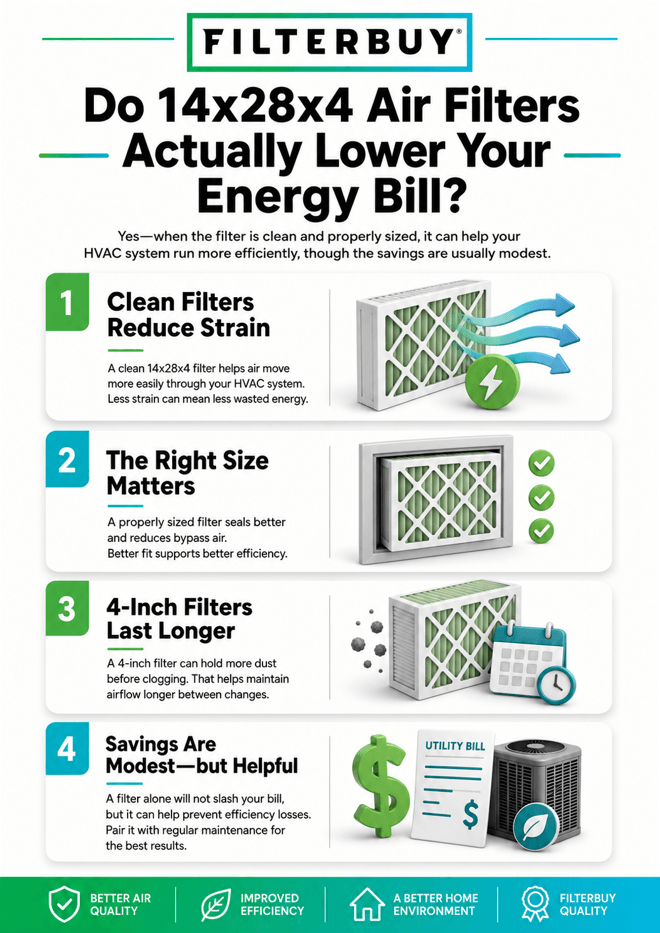
Yes, when the filter fits the slot, the MERV rating matches your blower, and you change it on schedule. A 4-inch filter packs more pleated surface area into the same opening than a 1-inch filter does. More surface area means less resistance through the media, which means your blower draws fewer amps to move the same volume of air. That math runs every minute your AC is on, and in Florida, our AC runs almost year-round. The biggest single bill drop usually comes from swapping a clogged 1-inch filter for a fresh 14x28x4. Going from a clean 1-inch to a clean 4-inch produces a smaller efficiency gain that builds up over months.
Top 5 Takeaways
The 4-inch depth is what matters most. More pleated surface area in the same opening means less airflow resistance and less work for your blower motor.
Match the MERV rating to your blower, not to the highest number on the shelf. The right MERV saves more than the highest MERV.
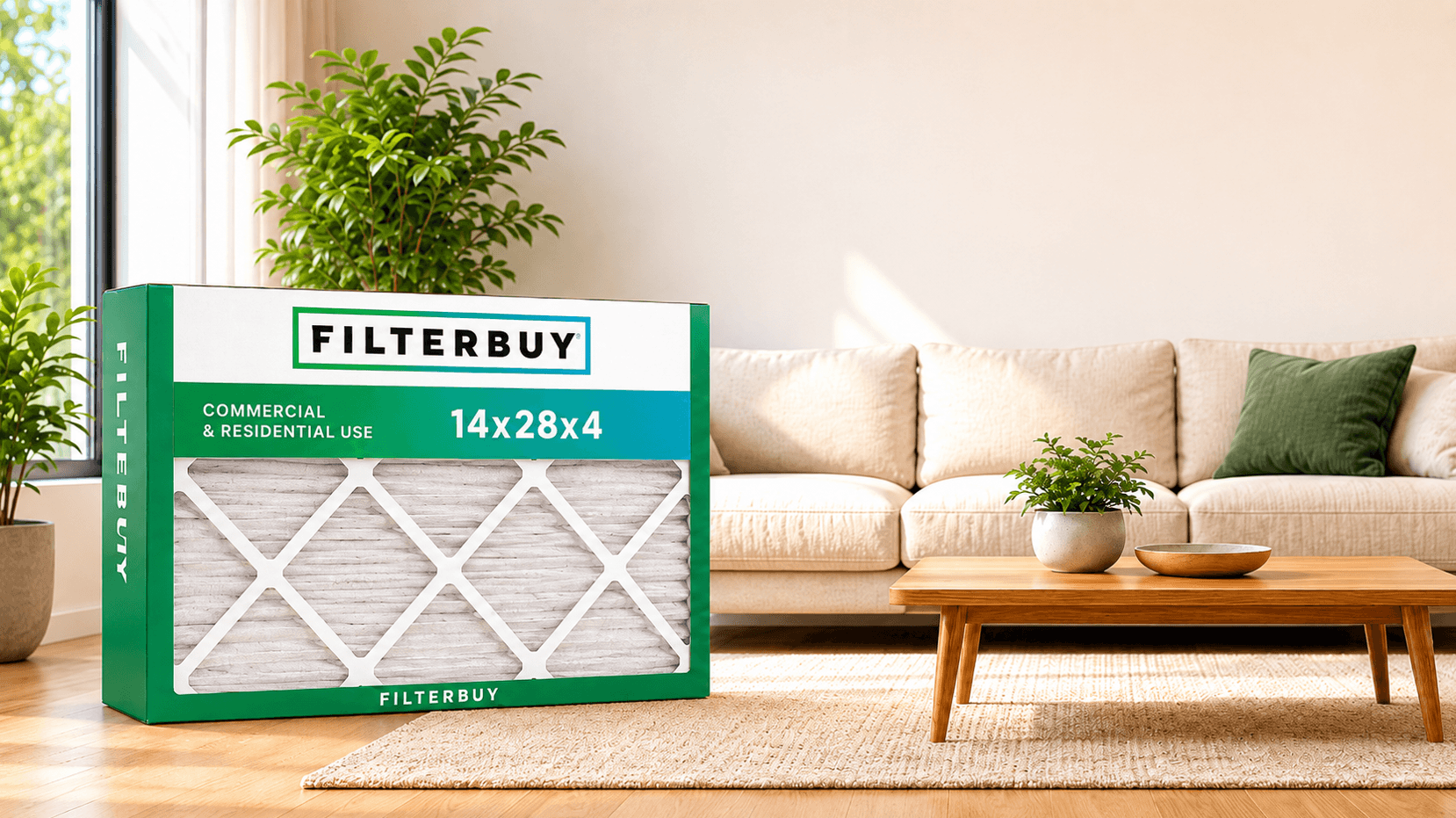
A 14x28x4 filter actually measures 13.5 x 27.5 x 4 inches. That is industry-standard nominal-versus-actual sizing.
Florida homes load filters faster than homes in seasonal climates. Year-round AC and our humidity push change intervals shorter.
Three things kill the savings: leaky ducts, an HVAC system past 12 years, and a filter slot that lets air slip around the edges.
How A 14x28x4 Air Filter Affects Your Power Bill
Your blower motor moves the air. The harder it has to push to do that, the more electricity it pulls from the wall. That relationship sits at the heart of every filter conversation we have with neighbors. A 1-inch filter packs maybe one to two square feet of pleated surface area into a 14x28 footprint. A 4-inch filter pleated to the same media spec puts four to five times more surface area into that same opening. More surface area means less static pressure across the filter, which means lower amperage at the blower.
That mechanical relationship is why any air filter upgrade conversation should start with depth before MERV rating. A thicker filter does not clean better than a thinner one at the same MERV. What it does is hold more dust before clogging, which lets it run longer without choking the blower. The longer your filter handles airflow without loading up, the less strain on your motor over a Florida summer.
What that looks like in practice:
We have watched homeowners hear the difference when they swap a clogged 1-inch for a fresh 14x28x4. The blower runs noticeably quieter within an hour.
Deeper media holds more dust before pressure climbs again. That gain lasts longer between filter changes, so the savings compound month over month.
MERV 8 Vs MERV 11 Vs MERV 13: Picking The Right Rating
This is where most of our neighbors get tripped up. The instinct is to grab the highest MERV number on the shelf, and we hear it constantly. The instinct is wrong. A higher MERV captures smaller particles by using denser filter media. Denser media creates higher static pressure on your blower. If your blower was not designed for that pressure, the AC starts running longer to hit the setpoint, and your bill ends up back where it was or higher than it was.
Here is how the three popular 14x28x4 ratings compare on a typical residential system:
MERV 8 captures lint, dust, and pollen. Good fit for homes without pets or allergies, especially older HVAC systems with smaller blowers. Lowest pressure drop of the three options.
MERV 11 captures pet dander, mold spores, and most pollen. Where the majority of South Florida households should land. It captures the particles that actually matter in our climate without choking the blower.
MERV 13 captures particles down to PM2.5, including wildfire smoke and many bacteria-sized particles. The right pick for asthma, smoke exposure, or any family member with respiratory sensitivity. Highest pressure drop, so verify your blower's static pressure rating before installation.
The advice we give most neighbors stays the same. Start with MERV 11 for the average Jupiter home. Step up to MERV 13 if you have a specific health reason. Step down to MERV 8 only if a technician has measured low static pressure on your blower.
When A 14x28x4 Filter Will Not Save You Money
Nothing burns us more than watching a neighbor invest in a quality filter and seeing no change on the bill. After years of working on homes from Jupiter Inlet down to Hobe Sound, we know the failure modes that erase the savings before they ever land.
Filter slot mismatch. A 14x28x4 that does not seat properly lets unfiltered air slip around the edges. The MERV rating becomes irrelevant, and the coil collects dust anyway.
MERV too high for the blower. Older or undersized blowers cannot push air through MERV 13 media without cycling over time. The system runs longer to hit the setpoint, which cancels out any savings.
Ductwork leaks. Return or supply ducts that leak into the attic mean you are paying to cool unconditioned space. No filter solves a duct problem.
Aging system. Most South Florida AC units last 12 to 15 years before mechanical losses outweigh anything filtration can do. Past that point, you need new equipment, not a new filter.
Skipped change intervals. A premium filter left in for nine months is worse than a basic filter replaced every three months. Loaded media chokes airflow regardless of brand.
If any of these apply to your home, address the underlying issue first. A 14x28x4 filter performs only as well as the system around it.
How To Choose A 14x28x4 Filter That Actually Performs
A few practical guideposts when you are standing in front of the shelf or scrolling through product pages:
Confirm the actual size before you order. Most 14x28x4 filters measure 13.5 by 27.5 by 4 inches. Measure your slot, then check the box for actual dimensions in the fine print. We have watched homeowners order the wrong size twice in a row because they trusted the printed nominal label on the old filter.
Match MERV to your household, not the shelf. Pets, allergies, smoke exposure, and the health of the people living in the house drive your MERV choice. Price tag does not.
Look for U.S. manufacturing. Florida humidity is hard on filter media. Domestically built filters tend to hold pleat structure better through a hot, sticky season.
Buy multiples. A 4-pack or 6-pack lowers your per-filter cost and removes the friction of late changes. The neighbors who keep filters on a shelf are the neighbors who actually change them on time.
Read the static pressure spec. Better-built filters publish pressure drop data alongside MERV ratings. If a product page lists MERV but does not list pressure drop, that is worth a question to the manufacturer.
If you are working with a different filter size, our team's filter selection guide for HVAC installations applies the same logic to 1-inch sizes.
“After manufacturing filters for over a decade and serving more than two million households, I tell neighbors the same thing every time. A 14x28x4 filter helps when it fits the slot, matches the blower, and gets replaced before it loads up. Skip any one of those, and the savings disappear before you ever see them on the bill.”
Essential Resources
Learn What Air Cleaners Can and Cannot Do for Your Home
The EPA's consumer guide explains what HVAC filters and portable cleaners actually do in residential homes, with plain-language guidance on selecting filters for your situation. It is the most reliable starting point for any homeowner researching filtration upgrades.
Source: EPA Guide To Air Cleaners In The Home
Cut Your Cooling Costs With Proper AC Maintenance
The U.S. Department of Energy's air conditioner maintenance page explains why dirty filters drive up energy use and how regular replacement protects system efficiency. It covers filter, coil, and condenser care in one place.
Source: DOE Energy Saver Air Conditioner Maintenance Guide
Plan A Smarter Filter Change Schedule
ENERGY STAR's heating and cooling efficiency page lays out month-by-month filter inspection and replacement guidance, plus the bigger-picture HVAC moves that compound the savings from filter upgrades.
Source: ENERGY STAR Heating And Cooling Efficiency Tips
Protect Your Family's Lungs With The Right Filter Choice
The American Lung Association's air cleaning page explains how MERV ratings affect particulate capture and why filters MERV 11 or higher are recommended for homes with allergy or respiratory concerns.
Source: American Lung Association Air Cleaning Recommendations
Improve Your Home's Indoor Air With Better Ventilation
The CDC's ventilation guidance walks homeowners through the relationship between filtration, air changes per hour, and indoor air quality. It clarifies why MERV 13 has become the modern recommendation for many residential settings.
Source: CDC Ventilation Guidance For Indoor Spaces
Understand The Industry Standard Behind MERV Ratings
ASHRAE's filtration and disinfection guidance is the technical reference behind every MERV rating you see on a filter package. It explains capture efficiency by particle size for each MERV level.
Source: ASHRAE Filtration And Disinfection Guidance Document
Stay Ahead Of Wildfire Smoke And Outdoor Air Events
AirNow's wildfire and air quality resource explains how PM2.5 from outdoor smoke events enters your home and how higher-MERV HVAC filters help keep indoor air breathable. Useful before, during, and after a smoke event.
Source: AirNow Wildfire Smoke And Health Resource
Supporting Statistics
MERV 13 is the modern recommended minimum.
The U.S. Department of Energy's Building America Solution Center reports that EPA and ASHRAE jointly recommend MERV 13 or higher for residential HVAC systems to protect against airborne respiratory pathogens. That recommendation has reshaped what “good enough” looks like in our service area.
Source: DOE Building America Solution Center High-MERV Filter Guide
3-month change intervals are clinically supported for typical homes.
A peer-reviewed rostrum from the American Academy of Allergy, Asthma & Immunology Indoor Allergen Committee, hosted on the National Library of Medicine archive, recommends 3-month filter change intervals for normal residential use, with annual replacement costs of roughly $40 to $80. That guidance lines up with what we see in real Jupiter homes.
Source: AAAAI Indoor Allergen Committee Filtration Rostrum (NIH PMC Archive)
Nearly half of metropolitan U.S. homes carry a health or safety hazard.
The National Center for Healthy Housing's State of Healthy Housing study found that 45% of metropolitan homes in the United States carry one or more health and safety hazards. Filtration is one of the few hazards a homeowner can fix in an afternoon.
Source: National Center For Healthy Housing, State Of Healthy Housing, Executive Summary
Final Thoughts And Opinion
14x28x4 air filters are one of the highest-leverage upgrades a Jupiter homeowner can make for the cost. It is also the only HVAC investment under twenty dollars that affects both your power bill and your family's air quality on the same day. After years of walking through homes across Palm Beach County, here is how we tell neighbors to think about it.
Most homes should run MERV 11. It captures the particles that matter for the average household without choking the blower.
MERV 13 belongs in homes with a specific health reason. Asthma, immune-compromised members, frequent wildfire smoke, or a family member with respiratory sensitivity.
Pleat depth matters more than most people realize. A 4-inch filter is genuinely gentler on a system that runs as much as ours does here.
The change interval is the lever you control month-to-month. Skip a change, and the best filter on the market starts costing you money instead of saving you any.
Filtration is invisible until something goes wrong. The neighbors who treat it as a quarterly habit rather than a once-a-year afterthought are the ones whose AC outlasts its warranty and whose July power bill does not catch them off guard.
Frequently Asked Questions
Q: Is a 14x28x4 air filter the same as 14 x 28 x 4?
A: Yes. The two are the same nominal dimensions written with or without spaces. Our team confirms slot size by measuring before ordering, because some homes use rare custom sizes that look similar but are not identical.
Q: Will a 14x28x4 furnace filter fit my AC system in Florida?
A: If your filter slot is built for a 4-inch media filter and the slot opening measures 14 by 28 inches, yes. We see this size most often on whole-home media cabinets installed during the past 15 years. Older systems with thin filter slots will not accept a 4-inch filter without a cabinet retrofit.
Q: How long does a 14x28x4 pleated filter last in a Jupiter home?
A: Most last 6 months in a standard household. Pets, allergies, or heavy AC use shorten that to 3 or 4 months. Florida humidity and year-round cooling typically push intervals shorter than what manufacturers list for seasonal climates.
Q: Does a higher MERV rating always save more energy?
A: No. Higher MERV means more airflow resistance, and a system that cannot push air through dense media will run longer to compensate. The right MERV for your blower saves more than the highest MERV available on the shelf.
Q: What is the actual size of a 14x28x4 air filter?
A: Most measure 13.5 by 27.5 by 4 inches. The quarter-inch undersizing on each face lets the filter seat in the slot without binding.
Q: Can a 14x28x4 air filter help with wildfire smoke?
A: Yes, when paired with a MERV 13 rating and a system that can handle the pressure drop. MERV 13 14x28x4 air filters capture most of the PM2.5 particles in smoke, which is the size range health agencies flag as most dangerous.
Q: Is it worth buying a 14x28x4 air filter 4-pack or 6-pack?
A: For most Jupiter households, yes. Buying multiples lowers per-filter cost and removes the friction of remembering to reorder. It pays for itself if it prevents a single missed change.
Schedule Your Free Filter Assessment
If your last power bill made you wince, a quick look at your filter slot can tell you why. Our local team will walk through your system in person and give you an honest, neighbor-to-neighbor answer about whether a 14x28x4 air filter upgrade is worth it for your specific home.
Learn more about HVAC Care from one of our HVAC solutions branches…
Filterbuy HVAC Solutions - West Palm Beach FL
1655 Palm Beach Lakes Blvd., Ste 1005 West Palm Beach, FL 33401
(561) 448-3760
https://maps.app.goo.gl/VarpgNZnxuPQuW8A7